
Top 11 RB2B Alternatives and Competitors in 2026
Compare the 11 best RB2B alternatives for B2B revenue teams in 2026, including pricing, strengths, limitations, and which tool is best for attribution, visitor ID, and outbound growth.
.avif)
Content Marketer

Content Marketer



.svg)


TL;DR
- If you're evaluating RB2B alternatives, you likely want one of three things: better website visitor identification, stronger outbound workflow support, or clearer attribution from anonymous traffic to pipeline.
- RB2B is useful for US-focused teams, but many revenue teams need broader coverage, deeper enrichment, stronger CRM sync, or more flexible pricing.
- Factors.ai is best for attribution-focused teams that want visitor intelligence tied to pipeline, campaign influence, and revenue outcomes.
- Apollo.io and ZoomInfo Sales are stronger fits for outbound-heavy sales teams that prioritize contact data, sequencing, and prospecting workflows.
- Dealfront and Lead Forensics are better fits when website visitor identification and regional coverage matter, especially for teams evaluating account-level versus person-level visibility.
- Before choosing a tool, compare visitor ID depth, US-versus-global coverage, enrichment quality, CRM integrations, and pricing scalability.
If you're comparing RB2B alternatives, you're probably trying to solve a specific revenue problem—not just buy another point solution. Some teams want stronger website visitor identification, others need better outbound execution, and many want clearer attribution from anonymous traffic to pipeline.
RB2B can be a solid option for US-focused teams, but it may not be the best fit if you need broader market coverage, deeper enrichment, more reliable CRM sync, or better visibility into which channels actually influence pipeline.
In this guide, we compare 11 RB2B alternatives based on best-fit use case, pricing model, strengths, limitations, and when each tool makes the most sense for B2B revenue teams in 2026.
Let's Learn More About RB2B
RB2B is generally used by B2B teams that want to identify website visitors and turn that activity into sales or marketing action. It is especially appealing to teams that want a lightweight way to surface person-level or company-level visitor intelligence without overhauling the rest of their go-to-market stack.
That said, buyer needs vary widely. Some teams care most about outbound-ready contact data, some care about attribution and campaign measurement, and others care about international coverage, compliance, or deeper account intelligence. That is why many teams evaluating RB2B also compare tools such as Factors.ai, Apollo.io, Dealfront, Clearbit, Lead Forensics, and ZoomInfo.
Here's Why You Need an RB2B Alternative
There is no single best tool for every revenue team. Depending on your motion, data needs, and market coverage requirements, an RB2B alternative may be a better fit.
- Your team needs more than visitor identification. Some teams need attribution, funnel analytics, campaign influence reporting, or account-level journey visibility—not just a list of visitors.
- You need broader geographic coverage. If your pipeline depends on EMEA or other non-US markets, you may want a platform with stronger global data coverage and a clearer privacy posture.
- You want stronger enrichment and outbound workflows. Some alternatives are better for sequencing, list building, enrichment, and prospecting than RB2B.
- You need deeper CRM and revenue reporting. If sales and marketing rely on shared reporting, tools with better CRM sync and multi-touch measurement may create more value.
- Your pricing risk increases as usage grows. Teams should compare not just entry-level pricing, but how cost scales with more traffic, users, or matched visitors.
How to choose the right RB2B alternative
- Person-level vs company-level identification: Decide whether your team truly needs named contacts, account-level visibility, or both.
- US-only vs global/GDPR-safe coverage: If you sell outside the US, international reach and privacy considerations matter much more.
- Enrichment and outbound readiness: Some tools are better for SDR workflows, contact discovery, and sequence execution than others.
- CRM sync and attribution depth: If you want marketing and sales to work from the same data, integrations and reporting depth are critical.
- Pricing model and scaling risk: Compare how pricing changes as your traffic, contact usage, and team size grow.
Here are the best RB2B alternatives:
1. Factors.ai
Overview
Factors.ai is an AI ABM and attribution tool. It helps B2B revenue teams identify high-intent traffic, connect it to campaigns, and understand which accounts and channels actually drive pipeline. It is a strong fit for teams that want more than visitor identification alone.
Best for: B2B revenue teams that need attribution plus visitor intelligence.
Choose this over RB2B if: You want to connect anonymous traffic, campaign influence, and pipeline outcomes instead of only identifying visitors.
Key strengths
- Multi-touch attribution and campaign measurement
- Website visitor intelligence tied to account journeys
- Integrations across sales and marketing systems
- Useful for teams aligning GTM reporting to revenue
Limitations
- May be more than a team needs if they only want lightweight visitor ID
- Best value comes when teams actively use attribution and reporting workflows
Pricing
Factors.ai offers custom pricing based on business needs and deployment scope.
2. Clearbit
Overview
Clearbit is widely used for enrichment, form optimization, and turning incomplete lead records into more actionable company and contact profiles.
Best for: Teams that want enrichment and faster lead qualification inside existing CRM and MAP workflows.
Choose this over RB2B if: Your main priority is enriching leads and accounts rather than building your workflow around website visitor identification.
Key strengths
- Strong enrichment data
- Useful CRM and marketing automation integrations
- Helpful for routing, scoring, and shortening forms
Limitations
- Less centered on website visitor intelligence than some RB2B alternatives
- Value depends on how much your team uses enrichment operationally
Pricing
Pricing is typically customized based on usage and product mix.
3. Kwanzoo
Overview
Kwanzoo is built for ABM teams that want stronger account engagement, personalization, and multichannel campaign execution.
Best for: Marketing teams running account-based programs for defined target account lists.
Choose this over RB2B if: You care more about ABM execution and account engagement than named visitor identification.
Key strengths
- ABM workflow support
- Personalization and multichannel engagement
- Useful for larger coordinated campaigns
Limitations
- May be more complex than needed for lean teams
- Best suited to structured ABM motions
Pricing
Kwanzoo typically provides custom quotes based on account scale and requirements.
4. Lead Forensics
Overview
Lead Forensics is built around spotting which companies are on your website and getting that to sales quickly. It works at the company level, so you see accounts rather than named visitors.
Best for: Teams that want dedicated website visitor intelligence and follow-up workflows.
Choose this over RB2B if: You want a platform centered on surfacing engaged accounts from website traffic and routing them to sales.
Key strengths
- Company-level identification with decision-maker contact data
- Real-time alerts, lead scoring and a built-in lead manager
- Helpful for account-level visibility
Limitations
- Doesn't identify individual visitors, which matters if you're weighing it against RB2B
Pricing
Pricing is quote-based and moves with your website traffic. There are two plans, and the number of users is unlimited.
5. HubSpot Sales Hub
Overview
HubSpot Sales Hub is a CRM-centered platform with pipeline management, automation, reporting, and sales workflow support.
Best for: Teams that want a unified CRM and sales process rather than a standalone visitor ID tool.
Choose this over RB2B if: Your biggest need is organizing revenue workflows, pipeline activity, and sales execution in one place.
Key strengths
- Strong CRM usability
- Broad ecosystem and integrations
- Helpful reporting and automation for growing teams
Limitations
- Not a direct substitute for dedicated visitor identification
- Costs can rise quickly with seats and add-ons
Pricing
HubSpot Sales Hub uses tiered seat-based pricing depending on plan level.
6. 6sense Revenue AI for Marketing
Overview
6sense Revenue AI for Marketing is designed for enterprise ABM teams that rely on intent data, account prioritization, and orchestration across channels.
Best for: Enterprise marketing teams running mature account-based programs.
Choose this over RB2B if: You need account-stage intelligence, intent data, and enterprise-grade orchestration more than simple visitor identification.
Key strengths
- Strong intent and account scoring capabilities
- Useful for personalization and orchestration
- Well suited to complex enterprise GTM motions
Limitations
- Complexity and cost may be high for smaller teams
- Implementation can require cross-functional adoption
Pricing
6sense pricing is typically custom and tailored to enterprise requirements.
7. Constant Contact Advanced Automation & CRM Platform
Overview
Constant Contact is better known for email marketing and automation than visitor intelligence, but it can still be relevant for small teams comparing simple GTM tooling options.
Best for: Small businesses that need approachable automation and campaign execution tools.
Choose this over RB2B if: You mainly need easy-to-run email and automation workflows rather than deep visitor identification.
Key strengths
- Beginner-friendly automation
- Accessible campaign tools for smaller teams
- Useful for email-driven engagement
Limitations
- Not a strong direct replacement for visitor intelligence platforms
- Less suited to complex B2B revenue teams
Pricing
Constant Contact offers tiered plans that scale by features and usage.
8. Apollo.io
Overview
Apollo.io combines a large B2B database with prospecting, sequencing, and sales engagement workflows.
Best for: Outbound sales teams that want data plus execution in one platform.
Also read: ZoomInfo Pricing in 2026: Plans, Costs, Alternatives & Overview
Choose this over RB2B if: You want to find contacts, build lists, and run outbound sequences—not just identify who visited your site.
Key strengths
- Strong prospecting workflows
- Large contact database
- Useful sequencing and engagement features
Limitations
- Data quality can vary by segment
- Email deliverability and contact accuracy still need process oversight
Pricing
Apollo.io offers a free tier plus paid plans for larger teams and workflow needs.
9. Dealfront (formerly Echobot & Leadfeeder)
Overview
Dealfront combines website visitor intelligence with broader go-to-market workflows and is especially relevant for teams that care about European market coverage.
Best for: GTM teams that want account-level website visitor insights with stronger European relevance.
Choose this over RB2B if: You need a more global or Europe-friendly approach to account intelligence and website visitor tracking.
Key strengths
- Strong website visitor intelligence
- Useful filters, labels, and workflow support
- Good fit for privacy-conscious regional teams
Limitations
- May require more manual setup in some integrations
- Best fit depends on your regional coverage needs
Pricing
Dealfront offers custom pricing based on product package and team requirements.
Also read: Leadfeeder (Dealfront) vs. Factors: Compare pricing and features
10. 6sense Revenue AI for Sales
Overview
6sense Revenue AI for Sales helps enterprise sellers prioritize accounts, understand buying teams, and act on intent signals earlier. If you are looking to switch from 6Sense, this blog 6Sense alternatives and competitors will help you shortlist.
Best for: Enterprise sales teams that need deep account intelligence and prioritization.
Choose this over RB2B if: Your sales process depends on account selection, buying-team context, and revenue prioritization at scale.
Key strengths
- Buying-team and account intelligence
- Strong prioritization workflows
- Good fit for complex enterprise sales motions
Limitations
- May be too heavyweight for simpler teams
- Adoption depends on sales process maturity
Pricing
6sense offers customized packages based on features, users, and team needs.
Also read: Factors.ai vs 6Sense for ABM
Also read: 10 Best Visitor Queue Alternatives For B2B Teams
11. ZoomInfo Sales
Overview
ZoomInfo Sales is a large-scale sales intelligence platform built for teams that need extensive company and contact data plus operational depth.
Best for: Outbound-heavy teams that need broad data coverage, filtering, and sales operations support.
Choose this over RB2B if: You need a large B2B contact database and prospecting infrastructure more than website-first visitor identification.
Key strengths
- Depth and scale of company and contact data
- Strong filtering and workflow support
- Useful for larger SDR and RevOps teams
Limitations
- Costs can be significant
- Teams should still validate data quality operationally
Pricing
ZoomInfo generally provides custom pricing based on package scope and team size.
How can Factors help?
Factors.ai is especially compelling if your team wants an RB2B alternative that goes beyond identification and helps explain revenue impact.
- Attribution-first visibility: See which campaigns, channels, and touchpoints actually influence pipeline.
- Visitor intelligence with revenue context: Connect anonymous website activity to accounts, journeys, and downstream outcomes.
- Stronger marketing and sales alignment: Give both teams shared visibility into what drives engagement and conversion.
- Better signal prioritization: Focus on high-intent accounts instead of reviewing disconnected traffic data.
- Flexible measurement for modern GTM teams: Use one platform to evaluate performance across campaigns, content, and buying journeys.
Find the best RB2B alternative today
The best RB2B alternative depends on what your team is optimizing for. If you need attribution and visitor intelligence together, Factors.ai is a strong fit. If you need outbound execution, Apollo.io or ZoomInfo Sales may be better choices. If you need enterprise ABM orchestration, 6sense may be a better match. And if global or GDPR-conscious coverage matters more, Dealfront is worth a closer look.
If your team wants an RB2B alternative that connects visitor identification with attribution and pipeline analysis, Factors.ai is a strong place to start.
Also read: 10 Best Madison Logic Alternatives And Competitors In 2026
FAQs on RB2B Alternatives
What should I look for in RB2B alternatives?
Look at five things first: identification depth, geographic coverage, enrichment quality, CRM and attribution integrations, and how pricing scales as usage grows. The right choice depends on whether your priority is visitor intelligence, outbound execution, or revenue measurement.
Which RB2B alternatives are best for global teams?
Global teams usually care more about regional coverage, compliance posture, and account-level visibility across markets. Dealfront is often evaluated for stronger European relevance, while enterprise tools such as 6sense and broader platforms like Factors.ai may be better fits depending on your reporting and orchestration needs.
Which RB2B alternatives are best for outbound sales teams?
Apollo.io and ZoomInfo Sales are common picks for outbound-heavy teams because they combine contact data, segmentation, and workflow support for prospecting. They are usually a better fit than RB2B when list building and sequence execution are the main priority.
Which RB2B alternatives are best for attribution-focused marketing teams?
Attribution-focused teams should prioritize tools that connect visitor activity to campaign influence and pipeline outcomes. Factors.ai stands out here because it helps teams move from identifying traffic to understanding what actually drives revenue.
Is RB2B enough on its own for revenue teams?
For some teams, yes—especially if the main need is lightweight website visitor identification. But many revenue teams eventually need more enrichment, better CRM sync, stronger outbound workflows, or deeper attribution than a visitor-identification-first tool can provide alone.
How do person-level and company-level visitor identification differ?
Company-level identification tells you which account visited your site, while person-level identification aims to identify an individual contact. Person-level data can be more actionable for outbound teams, but company-level data is often enough for ABM, routing, and attribution workflows.

See how Factors can 2x your ROI
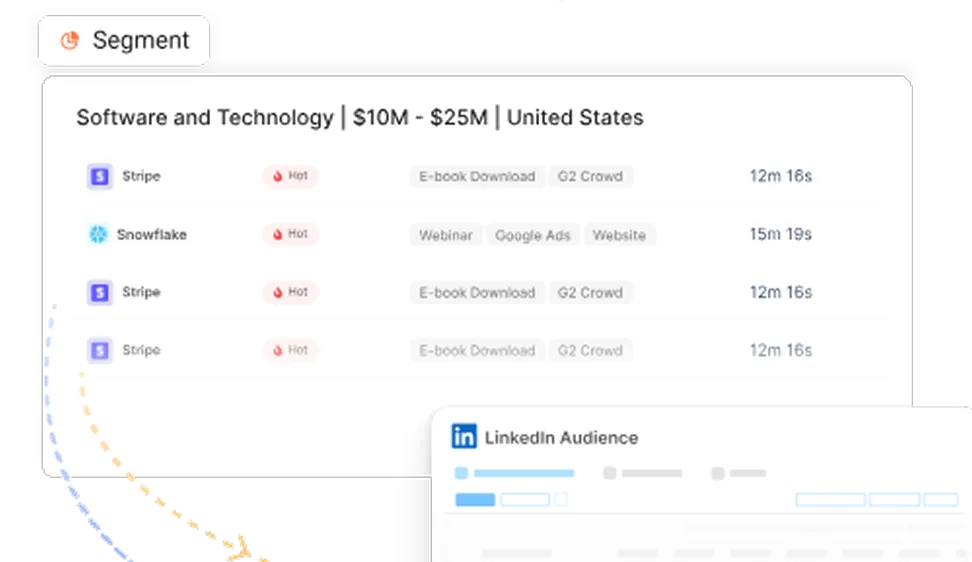
Boost your LinkedIn ROI in no time using data-driven insights


.avif)

See Factors in action.
Schedule a personalized demo or sign up to get started for free
LinkedIn Marketing Partner
GDPR & SOC2 Type II

.svg)



.avif)

