
Heading 2
Why your business needs SEO: a comprehensive guide for B2B
Learn why your business needs SEO for pipeline, trust, and sustainable growth. A B2B guide with real impact metrics and modern search insights.
Written by
.avif)
Vrushti Oza
Content Marketer
Summarize this article




.svg)


TL;DR
- SEO captures demand that already exists. Buyers search before they buy, and your visibility during that research phase shapes whether you make the shortlist or get ignored entirely.
- The value of SEO extends well beyond Google rankings, it influences AI overviews, ChatGPT citations, Perplexity answers, and how your brand shows up across an expanding search ecosystem.
- For B2B companies, SEO shortens sales cycles, builds category authority, and lowers customer acquisition costs in ways paid channels can't sustain alone.
- Now, SEO means buyer-intent research, revenue-stage content, technical hygiene, and first-party data loops. It doesn't mean keyword stuffing or publishing hundreds of thin posts.
- A focused 90-day plan covering technical foundations, revenue content, and scaling winners can move the needle faster than most teams expect.
A friend recently asked me recently, “Why do we need SEO? We already run ads… isn’t SEO, ‘dead’?”
Cute question.
Because the minute real buyers have a real problem, they don’t lovingly wait for your next campaign. They go searching, open tabs, compare options, read reviews, stalk competitors, and build a shortlist before your sales team even knows they exist.
That’s where SEO earns its keep.
Ads are like paying for VIP entry every night. SEO is getting your name on the guest list permanently. One stops when budget does. The other keeps pulling people in while you sleep.
And search isn’t just Google anymore… it’s LinkedIn, YouTube, AI tools, Reddit threads, review sites, and that one chaotic forum where buyers overshare everything.
This guide is anything but dusty SEO jargon. It’s about why search still prints money for smart businesses, and how to make it work for revenue, not vanity charts.
Why does your business needs Search Engine Optimization (the short answer first)?
Your business needs SEO because buyers search before they buy. That behaviour hasn't changed in twenty years, and it isn't changing now. What has changed is where those searches happen and how many of them occur before a buyer ever fills out a form or books a call.
SEO helps you show up when demand already exists. It builds trust before sales conversations begin, lowers acquisition costs over time, and creates compounding traffic that paid ads can't sustain on their own. When someone searches "best account identification tools" or "LinkedIn ads attribution," they're signalling intent. If your brand doesn't appear in that moment, a competitor's brand does.
There's a common misconception worth addressing early. SEO isn't "free traffic." It requires investment in content, technical infrastructure, and ongoing optimisation. But the return model is fundamentally different from paid channels. With ads, you rent attention for as long as you're willing to pay. With SEO, you build owned visibility that appreciates over time, like an asset on your balance sheet rather than a line item on your P&L.
This distinction matters most when ad costs rise, and they always do. Every B2B marketer I know has watched CPCs creep up year over year across Google and LinkedIn. SEO doesn't eliminate that pressure, but it reduces your dependence on it. It gives you a channel where the cost per visit trends downward as your content library matures, even while paid channels trend the other way.
The other underappreciated benefit is timing. SEO helps buyers discover you before they speak to sales. By the time your SDR sends that first email, the prospect has already read your comparison page, scanned your pricing approach, and formed an opinion. That pre-education changes the entire dynamic of the first conversation.
What does SEO do for your business?
Most explanations of SEO stop at "it helps you rank higher on Google." That's true, but it's a bit like saying a gym membership helps you lift heavy things. Technically correct, functionally incomplete. The real question is what ranking higher actually does for your business operations, and the answer touches more functions than most teams realize.
- Demand capture
The most direct function is capturing demand that already exists. When someone types "best ABM software" or "account identification tools" into a search bar, they're actively looking for a solution. They've recognised a problem, and they're evaluating options. SEO puts your brand in front of those buyers at the exact moment their intent is highest. You don't have to convince them they have a problem. You just have to show up with a credible answer.
- Trust creation
Buyers trust brands that repeatedly appear during their research. If a prospect searches three different questions over two weeks and your content shows up each time, you've established familiarity before anyone on your team has sent a single email. That kind of ambient brand presence is incredibly difficult to manufacture through paid channels alone, because it requires consistency across a range of topics rather than a single ad placement.
- Buyer education
SEO pages answer objections before demo calls happen. A well-structured pricing page, a comparison post, or a use-case breakdown does the heavy lifting that an SDR would otherwise have to do in real time. When your content addresses the "but does it integrate with Salesforce?" question before the prospect even asks it, you've shortened the path to a meaningful conversation. Think of it as pre-selling without the sales pitch.
- Pipeline support
Organic visitors don't always convert on their first visit, and that's fine. They become remarketing audiences, email subscribers, or they return weeks later when the buying committee expands. SEO feeds the top of your funnel in a way that quietly supports every downstream conversion channel. The visitor who reads your blog post today might become the demo request next month after seeing your LinkedIn ad twice.
- Market intelligence
Here's a function that rarely gets mentioned. Your keyword data is a real-time window into what buyers care about right now. When search volume shifts from "marketing attribution" to "AI-powered attribution," that's a signal. When a new comparison query like "[your competitor] vs [emerging player]" starts gaining traction, that's market intelligence you didn't have to commission a research firm to find. SEO is often your cheapest research department and quietest salesperson, working in parallel.
SEO is now bigger than Google rankings
If your mental model of SEO is still "rank on page one of Google," you're working with an outdated map. The territory has expanded dramatically, and businesses that only optimise for traditional blue links are leaving visibility on the table across an entire ecosystem of surfaces.
Modern SEO now influences how your brand shows up in Google's AI Overviews, those summary boxes that appear above organic results. It affects whether ChatGPT cites your content when someone asks for software recommendations. It shapes how Perplexity synthesises answers from across the web and whether Bing Copilot surfaces your brand in conversational queries. It even determines whether your expertise shows up in Reddit threads and community discussions that feed into these AI systems.
Businesses no longer compete only for blue links. They compete for answers. When a buyer asks an AI assistant "what's the best way to track account-level website visits," the answer gets assembled from content that's well-structured, authoritative, and consistently present across the web. If your content isn't part of that mix, you're invisible in a growing share of how people actually find information.
This is why I think of modern SEO as a search visibility stack rather than a single channel. The stack has multiple layers, and each one reinforces the others.
The search visibility stack:
- Traditional rankings. Your pages appearing in organic search results for relevant queries. This is still the foundation, and it still drives the majority of organic traffic for most businesses.
- AI answer inclusion. Your content being cited or synthesised in AI Overviews, ChatGPT responses, and Perplexity answers. This layer is growing rapidly and favours content that's well-structured and clearly authoritative.
- Brand mentions across the web. Your company being referenced in third-party articles, roundups, directories, and discussions. These mentions feed both traditional authority signals and the training data that AI systems draw from.
- Review and community trust signals. Your presence on G2, Capterra, Reddit, and industry forums. AI systems increasingly weight community consensus when generating recommendations.
Each layer of this stack feeds into the others. Strong organic rankings lead to more brand mentions. Brand mentions improve authority signals. Authority signals increase the likelihood of AI citation. And AI citations drive awareness that loops back into branded searches and direct visits.
The practical implication is that SEO strategy can't be siloed into "content and backlinks." It has to account for how your brand shows up across every surface where buyers search, ask, or research. The companies that understand this shift will have a structural advantage over those still chasing keyword positions in isolation.
What is the business value of SEO in B2B?
In B2B, the sales cycle is longer, the buying committee is bigger, and the stakes per deal are higher. All three of these conditions make SEO disproportionately valuable compared to B2C, where the purchase decision might happen in minutes. When someone’s evaluating a SaaS platform that’ll cost their company six figures a year, they don’t impulse buy from an ad. They research extensively, and that research happens through search.
Mastering SEO basics is essential for any business online, as it lays the foundation for business success and online success by improving visibility and authority in search engines.
SEO does three powerful things for B2B companies specifically.
- First, it captures in-market demand. People searching for solutions already feel the pain. They know they have a problem with attribution, or account identification, or campaign analytics, and they’re actively looking for something to fix it. This is the highest quality organic search traffic you can acquire because the intent is already there. You don’t have to create awareness. You just have to be present when the search happens.
- Second, it creates category leadership. When prospects repeatedly encounter your insights across multiple searches, your brand feels larger than your actual size. A 50-person company that dominates search results for its category can feel like a 500-person company to a buyer doing research. That perception gap is powerful, especially for startups competing against established players with bigger sales teams and larger ad budgets.
- Third, it shortens sales cycles. Educated buyers need fewer calls. When a prospect has already read your comparison page, studied your integration documentation, and explored your use-case content, the first sales conversation can skip the basics entirely. Good SEO makes your first sales meeting feel like the third. The buyer already knows what you do, roughly how it works, and why it might be relevant to their situation.
The types of content that drive this value are specific and worth naming. Pricing pages reduce sticker shock before a call happens. Comparison pages (“Factors.ai vs [competitor]”) position your strengths directly against alternatives. Use-case pages (“SEO for B2B SaaS” or “attribution for demand gen teams”) help buyers see themselves in your product. Integration pages answer the “does it work with my stack?” question. And ROI calculators give procurement teams internal ammunition to push a deal forward.
Each of these page types sits at the bottom of the funnel, where search intent is closest to a purchase decision. They’re not vanity content. They’re pipeline content, and they compound in value every month they rank.
While B2B companies benefit greatly from SEO, local businesses also see significant gains by leveraging local SEO strategies. Optimizing for local SEO helps local businesses appear in local search results, especially for 'near me' queries, attracting nearby customers and driving foot traffic. This approach, combined with a focus on organic search traffic, is crucial for both small and large businesses aiming for sustained business success and online success.
Why SEO outperforms paid channels over time
I want to be careful with this section because the answer isn't "SEO is better than paid, full stop." The real answer is more nuanced, and it depends on your time horizon and your tolerance for compounding versus immediate returns.
Here's how the two channels compare across the dimensions that matter most for B2B growth:
The core distinction is an economic one. Ads rent attention. SEO builds equity. Every blog post, comparison page, or resource you create is an asset that can generate returns for months or years. A paid campaign, by contrast, delivers value only for as long as you're funding it. The moment you pause spend, visibility disappears.
For SaaS companies, this distinction becomes increasingly urgent as customer acquisition cost (CAC) pressure mounts. Most B2B SaaS companies I've spoken with have seen paid CPCs rise 15-30% year over year across Google and LinkedIn. That trend creates a compounding problem: you need more budget each quarter just to maintain the same volume. SEO offers a structural counterweight to that pressure because its cost per acquisition moves in the opposite direction over time.
But I want to offer a balanced view here, because the most effective growth strategies use both channels together. Paid campaigns are exceptional for testing messaging, capturing demand in new categories, and driving immediate pipeline when you need it. SEO provides the durable foundation that makes your paid spend more efficient, because retargeting audiences built from organic visitors typically convert at higher rates than cold audiences.
The fragility shows up when companies rely only on paid. If your entire pipeline depends on ad spend and that budget gets cut, whether from a downturn, a leadership change, or a budget reallocation, your pipeline disappears with it. SEO creates a safety net that keeps generating leads even during budget pauses. Relying only on paid is expensive fragility. Combining both gives you resilient, compounding growth.
What happens when businesses ignore SEO
This is the section I wish more founders would read before deciding that SEO can wait until "later." The cost of ignoring SEO isn't just missed traffic. It's a compounding disadvantage that gets harder to reverse the longer you wait.
- When you don't invest in SEO, your competitors own the category searches that your buyers use. Every query like "best [your category] software" or "[your category] comparison" returns results filled with competitor brands. Your potential buyers see those brands, read their content, and build trust with them, all before they know you exist. By the time your sales team reaches out, the prospect has already formed preferences shaped entirely by your competitors' content.
- The second problem is economic. Without organic traffic as a counterbalance, your CPCs rise with no fallback channel. You're entirely dependent on paid acquisition, which means every budget cut or platform policy change directly threatens your pipeline. I've seen companies lose 30% of their lead volume overnight when a Google Ads policy change affected their top-performing campaigns. The ones with strong SEO barely noticed because organic kept generating leads through the disruption.
- Then there's the outbound dependency problem. Without SEO, your sales team carries the entire burden of pipeline generation through cold outreach. That's an expensive, labor-intensive model that doesn't scale well, and it puts enormous pressure on individual reps to generate conversations from scratch. SEO-sourced leads arrive warmer because the buyer initiated the interaction. Without that channel, every conversation starts cold.
- The brand visibility gap might be the most damaging long-term consequence. During the research phase of any B2B purchase, buyers scan multiple sources across weeks or months. If your brand never appears during that journey, you're functionally invisible. Your expertise might be exceptional, but if nobody finds it, it behaves like it doesn't exist. I've seen brilliant technical teams with genuinely superior products lose deals to competitors whose only advantage was search visibility.
- There's also a newer dimension to this problem. AI tools now cite sources when answering buyer questions, and those citations draw heavily from well-established, SEO-optimized content. If your competitors have invested in SEO and you haven't, AI assistants will recommend their products and reference their content. You won't just be invisible in Google results. You'll be invisible in the AI layer too, and that layer is growing fast.
- Finally, existing content decays when it isn't maintained. Most companies have blog posts, documentation, or resource pages that could rank if they were optimized. Without an SEO strategy, that content sits unused, generating no traffic and no pipeline value. It's like having inventory in a warehouse that nobody knows exists.
What SEO looks like now…
There's a meaningful gap between what most people imagine when they hear "SEO" and what effective, real SEO actually involves today. The outdated version lives in many marketing leaders' mental models: stuff keywords into pages, build some backlinks, watch the rankings climb. That version hasn't worked well for years, and it's actively counterproductive.
Real SEO starts with deep buyer-intent research, not keyword volume research. The difference matters. Volume tells you how many people search for a term. Intent tells you what they're trying to accomplish when they search. A query like "what is ABM" signals educational intent from someone early in their learning journey. A query like "best ABM platforms for mid-market" signals evaluation intent from someone ready to compare options. Effective SEO maps content to these intent stages, not just to high-volume terms.
From there, real SEO ties content to revenue stages. Top-of-funnel content builds awareness and captures early research queries. Mid-funnel content (comparison pages, use-case breakdowns, integration documentation) supports active evaluation. Bottom-of-funnel content (pricing pages, ROI calculators, demo landing pages) supports purchase decisions. Each piece has a defined role in the buyer journey, and each one gets measured against pipeline contribution, not just traffic.
Technical hygiene is the unglamorous foundation that makes everything else work. Pages need to load quickly, render correctly for search crawlers, and be properly indexed. Internal linking needs to connect related content in a logical structure that helps both readers and search engines understand your site's architecture. Structured data and schema markup help search engines parse your content more accurately, which matters increasingly for AI answer generation.
First-party data feedback loops are what separate sophisticated SEO programmes from basic ones. This means using your CRM data, account identification tools, and analytics platforms to understand which organic content actually influences pipeline and revenue. When you can see that a specific blog post was the first touchpoint for 12 closed-won accounts last quarter, you can double down on that content pattern. Without that feedback loop, you're optimizing blind.
Refreshing existing content that's already performing is often more valuable than creating new content from scratch. Pages that rank on page two or have high impressions but low click-through rates represent immediate opportunities. Updating them with better information, clearer structure, and stronger calls to action can move them onto page one faster than publishing something entirely new.
It’s just as important to know what real SEO is not, because some myths refuse to die.
SEO is not keyword stuffing like it’s 2011. Search engines got wise to that years ago. It’s not publishing 100 forgettable blog posts and calling it a strategy. Volume without value is just clutter with ambition. It’s not celebrating traffic spikes while ignoring whether any of that traffic turned into pipeline, qualified leads, or actual revenue.
And it’s definitely not sending monthly ranking reports with zero business context. If your SEO report talks about impressions and positions but says nothing about pipeline, opportunities, or revenue, that isn’t a growth report. It’s website trivia.
SEO for B2B companies: the Factors.ai lens
Most SEO advice is written for e-commerce or media companies where the conversion event is simple: someone clicks, someone buys, someone subscribes. B2B is structurally different because the conversion event is complex, the buyer is usually a committee, and the journey spans weeks or months across multiple channels and touchpoints.
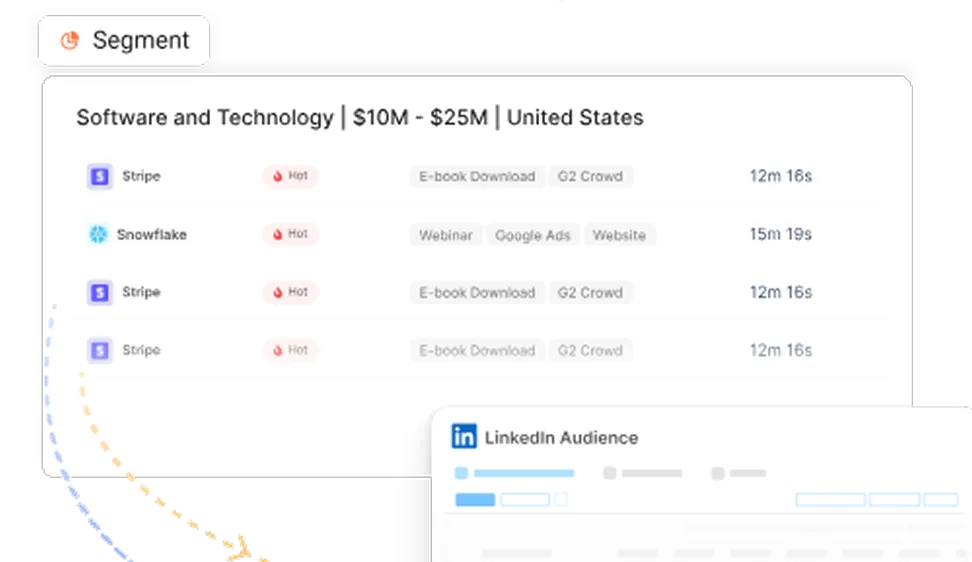
For B2B teams, SEO should connect to accounts, not only sessions. Knowing that you had 5,000 organic visits last month is interesting but incomplete. Knowing that 47 target accounts visited your comparison page from organic search, and 12 of those accounts later entered the pipeline, is actionable intelligence. That’s the shift in thinking that separates B2B SEO from generic SEO advice.
This is where a Factors.ai-style approach becomes relevant. When you can identify which companies visited your organic pages (not just anonymous session counts), you unlock a fundamentally different way of measuring SEO. You can track which keywords lead to pipeline by connecting the search query to the account that visited to the opportunity that eventually closed. You can see which pages influence enterprise opportunities specifically, rather than treating all traffic as equal.
As you begin your SEO journey, leveraging free tools like Google Analytics and Google Search Console is essential for measuring and monitoring your search traffic. These tools help you understand which keywords and pages drive valuable visits and conversions, providing actionable insights for ongoing optimization.
The organic versus paid assist path analysis is another layer most teams miss. A buyer might first discover your brand through an organic blog post, then see a LinkedIn ad two weeks later, then return directly to request a demo. In a last-touch model, direct gets the credit. In an account-level view, you can see that organic initiated the relationship. That visibility changes how you allocate resources between channels.
Content performance measurement changes too when you think at the account level. Instead of asking “which blog posts get the most traffic,” you can ask “which blog posts are read by accounts that eventually close.” Those are often different lists. A niche comparison page with 200 monthly visits might influence more revenue than a broad thought leadership post with 5,000 visits, but you’d never know that from a standard analytics dashboard.
Additionally, optimizing your Google Business Profile is a crucial step for improving local B2B visibility and attracting potential customers searching for your services in your area.
Traffic is nice to see, but revenue-by-account is wayyy better. That’s the lens that makes SEO a revenue function rather than a marketing vanity metric, and it’s the lens that earns SEO a permanent seat at the pipeline review table.
How to measure SEO impact properly
The measurement problem in SEO is that the easiest metrics to track are often the least useful for making business decisions. Rankings, organic sessions, and indexed page counts are all visible in standard tools, and they're all fine as diagnostic indicators. But they don't answer the question that your CFO or VP of Sales actually cares about: what revenue came from search this quarter?
Let's separate the basic metrics from the ones that actually drive decisions.
Basic metrics (diagnostic, not decisive):
- Organic sessions (total volume)
- Keyword rankings (positional tracking)
- Click-through rate from search results
- Number of indexed pages
These tell you whether your SEO programme is technically healthy and directionally growing. They're useful for the SEO team's internal reviews, but they shouldn't be the centerpiece of your executive reporting. A ranking improvement from position 8 to position 4 is meaningless if it doesn't translate into more pipeline.
Better metrics (business outcomes):
- Demo requests originating from organic landing pages
- Pipeline value influenced by organic touchpoints
- Customer acquisition cost for organic versus paid channels
- Assisted conversions where organic was part of the journey
- Opportunity rate by landing page (which pages produce qualified pipeline)
- Growth in returning branded searches (a signal of awareness driven by content)
These metrics connect SEO activity to business results. They require more setup, usually involving CRM integration and proper UTM tagging, but they transform SEO reporting from a traffic story into a revenue story.
The executive dashboard question should be straightforward. When your leadership team asks about SEO performance, the answer should sound like: "Organic search influenced £420K in pipeline this quarter, sourced 34 demo requests, and our organic CAC is 62% lower than our paid CAC." That's a conversation about business value, not about keyword positions.
Getting to this level of measurement isn't trivial. It requires connecting your analytics platform to your CRM, implementing proper attribution tracking, and establishing clear definitions for what "organic-sourced" and "organic-influenced" mean in your context. But the investment in measurement infrastructure pays for itself by making every subsequent SEO decision more informed and defensible.
One underrated metric deserves special mention: the ratio of branded to non-branded organic traffic over time. When your non-branded organic traffic grows (people finding you through category and problem-based searches), it means your SEO is capturing new demand. When your branded traffic grows alongside it, it means that awareness is converting into recognition. Both trends together signal a healthy, compounding SEO programme.
The 90-day SEO action plan for businesses
Strategy without a timeline is just a wish. If you're convinced that SEO deserves investment but aren't sure where to start, here's a practical 90-day framework that moves from foundations to revenue content to scale. Each phase builds on the previous one, so the sequence matters.
Days 1–30: fix the foundations
Before you create a single new page, make sure your existing site isn't sabotaging itself. This phase is about technical hygiene and measurement infrastructure.
- Run a comprehensive technical crawl. Use a tool like Screaming Frog or Sitebulb to identify crawl errors, broken links, redirect chains, and orphaned pages. Fix the critical issues first: pages returning 404 errors, redirect loops, and any pages accidentally blocked from indexing.
- Audit your indexing. Check Google Search Console to see which pages are indexed and which aren't. If important pages aren't being indexed, investigate why. Common culprits include noindex tags left over from staging environments, thin content that Google deems unworthy of indexing, and poor internal linking that leaves pages isolated.
- Improve page speed. Run your key landing pages through PageSpeed Insights and address the highest-impact issues. Image compression, lazy loading, and eliminating render-blocking scripts typically deliver the biggest improvements. Page speed affects both rankings and user experience, so this work pays dividends across channels.
- Clean up metadata. Review title tags and meta descriptions for your top 20 pages. Ensure each title tag is unique, under 60 characters, and includes relevant keywords naturally. Make sure meta descriptions are compelling and under 155 characters. These small changes can meaningfully improve click-through rates from search results.
- Set up proper analytics. Ensure your Google Analytics (or equivalent) is properly tracking organic traffic by landing page, and that UTM parameters are configured correctly for any campaigns. Connect your analytics to your CRM if possible, so you can trace organic visits through to pipeline and revenue. This measurement foundation makes every subsequent decision smarter.
Days 31–60: build revenue content
With the technical foundation solid, this phase focuses on creating the content that directly supports pipeline generation. Prioritize bottom-of-funnel and mid-funnel content over top-of-funnel blog posts.
- Create comparison pages. Build pages that compare your product to key competitors. Buyers search for these queries when they're actively evaluating options, so the intent is extremely high. Be honest and specific in comparisons. Credibility matters more than spin.
- Build solution and use-case pages. Create pages for each major use case your product supports. "SEO analytics for B2B SaaS" or "account identification for enterprise sales" are the kinds of pages that connect buyer problems to your capabilities. Each page should clearly articulate the problem, your approach, and the outcome.
- Develop high-intent blog clusters. Identify 3-5 topic clusters around your primary keywords and create 2-3 articles per cluster. Each cluster should have a pillar page (comprehensive overview) linked to supporting articles (specific subtopics). This structure signals topical authority to search engines and creates natural internal linking paths.
- Optimize existing high-potential pages. Using Search Console data from Phase 1, identify pages that rank on page two or have high impressions but low clicks. Update these with better content, stronger headers, clearer structure, and improved metadata. Moving an existing page from position 12 to position 6 is often faster than ranking a new page from scratch.
Days 61–90: scale the winners
By this phase, you'll have data on what's working. The goal now is to amplify successful content and extend its reach.
- Refresh pages showing strong impressions. Pages that are gaining impressions but not yet converting well are your best optimization candidates. Add clearer CTAs, improve the content depth, and strengthen internal links pointing to these pages. Small improvements on pages that already have momentum can produce outsized results.
- Add strategic calls to action. Review your top-performing organic pages and ensure each one has a clear, relevant CTA. A comparison page should link to a demo request. A use-case page should offer a relevant resource or consultation. Match the CTA to the intent stage of the content so it feels like a natural next step rather than an interruption.
- Strengthen internal linking. As your content library grows, internal linking becomes increasingly powerful. Link new articles to relevant existing pages and vice versa. Create clear pathways from educational content to evaluation content to conversion pages. Good internal linking helps both readers and search engines navigate your site's expertise.
- Repurpose into other channels. Your best-performing organic content is a goldmine for other channels. Turn key insights into LinkedIn posts. Extract statistics or frameworks for email newsletters. Convert comparison content into sales enablement materials. SEO content shouldn't live in isolation. It should fuel your entire marketing engine.
This 90-day plan won't transform your organic channel overnight. But it creates the infrastructure and content foundation that makes compounding growth possible. Most teams that follow a structured approach like this see measurable movement in organic traffic and pipeline contribution within the first quarter, with accelerating returns in the quarters that follow.
In a nutshell…
SEO is (and never was) a nice-to-have marketing experiment. It's a core growth function for any B2B business that wants sustainable pipeline, lower acquisition costs, and visibility across an expanding ecosystem of search surfaces.
The buyers you want to reach are searching right now, across Google, AI assistants, and community platforms. They're reading comparison pages, scanning use-case content, and forming preferences weeks before they ever talk to a salesperson. Your presence (or absence) during that research phase directly shapes whether you make the shortlist.
The value of SEO compounds over time in a way that paid channels can't. Every page you build, every technical improvement you make, and every content refresh you publish adds to a growing asset base that generates returns long after the initial investment. That doesn't mean you should abandon paid channels. It means you should build the organic foundation that makes your entire growth engine more resilient and more efficient.
If you're starting from scratch or restarting after a period of neglect, the 90-day framework in this piece gives you a practical starting point. Fix your technical foundations first, then build the revenue-stage content that captures high-intent demand, then scale what works. Measure against pipeline and revenue, not just traffic and rankings. And connect your SEO data to account-level insights so you can see which content actually influences the deals that close.
The companies that treat SEO as a strategic investment, rather than a checkbox, will have a compounding advantage that gets harder for competitors to replicate with each passing quarter. The best time to start was a year ago. The second-best time is this month.
Frequently asked questions about why your business needs SEO
Q1. Is SEO worth it for small businesses?
Yes, and often more so than for larger companies. When your ad budget is limited, SEO provides a way to compete for visibility without paying per click. Small businesses with strong local or category demand can capture significant traffic by creating focused, high-quality content around the specific queries their buyers use. The investment is proportionally smaller too, since you're targeting a narrower set of keywords rather than competing across broad categories.
Q2. How long does SEO take to show results?
Most businesses see initial movement within 3-6 months, including improved rankings, growing impressions, and early traffic gains. Meaningful compounding, where organic traffic becomes a reliable and growing pipeline source, typically takes 6-12 months. The exact timeline depends on your site's existing authority, the competitiveness of your target keywords, and how aggressively you invest in content and technical improvements. The important thing to understand is that SEO returns accelerate over time rather than remaining flat, so the patience invested in the early months pays back disproportionately later.
Q3. What is the purpose of SEO?
The purpose of SEO is to help the right buyers find and trust your business through search. It's about being visible at the moment someone is actively looking for a solution you provide, whether that's through a traditional Google search, an AI assistant query, or a community research thread. Effective SEO doesn't just drive traffic. It drives relevant traffic from people who are already experiencing the problem your product solves, which is why it tends to produce higher-quality leads than most other channels.
Q4. Is SEO still relevant with AI search?
Absolutely. AI search tools like ChatGPT, Perplexity, and Google's AI Overviews don't replace SEO. They rely on it. These systems synthesize answers from content that's well-structured, authoritative, and widely referenced across the web, which is exactly what strong SEO produces. Companies with robust SEO programmes are more likely to be cited in AI-generated answers, which creates a new layer of visibility beyond traditional rankings. Ignoring SEO in the AI era actually makes you less visible, not more, because you're absent from the content pool that AI systems draw from.
Q5. Can B2B SaaS companies rely only on paid ads?
They can in the short term, but the economics tend to deteriorate. CPCs across Google and LinkedIn have been rising steadily, which means the cost of maintaining the same lead volume increases every quarter. Without organic traffic as a counterbalance, your entire pipeline is dependent on sustained ad spend, creating a fragility that becomes painfully obvious during budget cuts or platform policy changes. The strongest B2B SaaS growth engines use paid and organic together, with paid driving immediate demand and SEO building the durable foundation that improves efficiency over time.
Q6. What industries benefit most from SEO?
Most industries benefit, but SEO is particularly powerful in high-consideration categories where buyers research extensively before making a decision. SaaS, legal services, healthcare, financial services, education, and professional services all see strong returns from SEO because their buyers conduct multiple searches across a longer decision timeline. The more complex and expensive the purchase, the more research happens, and the more valuable it is to be present throughout that research journey.

See how Factors can 2x your ROI
Boost your LinkedIn ROI in no time using data-driven insights
Try AdPilot Today


.avif)

See Factors in action.
Schedule a personalized demo or sign up to get started for free
LinkedIn Marketing Partner
GDPR & SOC2 Type II

.svg)










.png)