Heading 2
B2B SaaS Google Ads Playbook: How to Fix Budget Leaks, Find High-Intent Buyers, and Scale Efficiently
Stop wasting budget on B2B Google Ads. Learn how to structure SaaS campaigns, use offline conversions for pipeline ROI, and scale high-intent keyword strategies.
Written by
.avif)
Vrushti Oza
Content Marketer
Summarize this article






.svg)

- Stop optimizing for "Cost Per Lead" (CPL) and start optimizing for "Cost Per SQL" and "Pipeline ROI."
- Organize your account by Funnel Stage (TOFU, MOFU, BOFU) and Intent Type (Brand vs. Non-Brand) to prevent branded terms from masking poor performance.
- Prioritize commercial intent over search volume. Use negative keywords aggressively to filter out "free," "jobs," or "templates" traffic.
- Every ad and landing page should have exactly one goal. Mismatched CTAs (e.g., an ad for a demo leading to a blog post) kill ROI.
- Use Offline Conversion Tracking (OCT) to feed CRM data (SQLs, Deals) back into Google. This trains Google’s "Smart Bidding" to find buyers, not just clickers.
You’re spending $10K+ a month on Google Ads… but not able to see ROI or understand if the channel is worth it.
Welcome to the club… we've all been there.
Cost per lead looks fine.
CTR isn't terrible.
Yet pipeline? Barely moving.
This blog is for B2B marketers who are bleeding budget on keywords that never convert; unsure if branded terms are eating all the credit, drowning in data, but starving for insights; and trying to scale, but everything breaks at $15K/mo
Let’s fix that.
Most common Google Ads mistakes (and how to fix them)
Mistake 1: Optimizing for clicks instead of pipeline
The issue: Google rewards clicks. Your CRM rewards revenue. Big difference.
Fix:
- Integrate offline conversions with Google Ads (CRM sync or manual uploads)
- Use offline conversion tracking (GCLID or enhanced conversions for leads)
- Assign values to different lead types (e.g., $10 for newsletter, $200 for demo request)
- Set up custom goals aligned with your pipeline stages inside Google Ads
- Layer Google Ads data with CRM attribution to map real influence on deals
Mistake 2: Branded terms masking real performance
The issue: Branded keywords make performance look great, but they don’t create new demand.
Fix:
- Create dedicated campaigns for Brand vs Non-Brand
- Use Exact Match only for branded terms
- Evaluate brand lift vs lead gen: Look at assisted conversions, not just direct clicks
- Track first-touch vs last-touch influence through a CRM or attribution tool like Factors
Mistake 3: Broad match without controls
The issue: Google broad match + smart bidding = budget gone in a day.
Fix:
- Start campaigns with Exact or Phrase Match only
- Review the Search Terms Report every 48-72 hours
- Build and constantly update a negative keyword list
- Use Intent-based segmentation: Map keywords to ToFu, MoFu, BoFu
- Use Experiments to test broad match safely before rolling out
Mistake 4: Over-indexing on Smart Campaigns
The issue: Automation is convenient, but lazy campaigns stay mediocre.
Fix:
- Use manual CPC bidding to establish baseline costs and benchmarks
- Switch to Target CPA/Max Conversions once you hit 30+ conversions per month
- Break Smart Campaigns into funnel stages, persona segments, or geo-locations
- Use shared budgets for scaling after benchmarks are in place
Campaign and account architecture
A cluttered Google Ads account isn’t just hard to manage; it directly leads to the following:
- Reporting inaccuracies
- Wasted budget across audiences
- Inability to scale what's working
A well-structured account does more than organize your ads. It allows you to:
- Align spend with funnel stages
- A/B test effectively
- Run segmented reports for CAC, ROAS, SQLs
- Scale top-performing units without dragging down results
✅ Account Structure
✅ How to split campaigns (and why should you do it?)
Use segmentation only where it drives performance or clarity. Over-fragmentation = under-delivery.
- Funnel Stage
Every campaign must map to a funnel stage so that targeting, keywords, landing pages, and metrics are aligned.
- Region
Regional splits are essential for budget allocation, localization, and geo-performance reporting.
📌 Pro-Tip: If your sales or SDR team is regionalized, your campaigns should be too.
- Intent Type: Brand vs Non-Brand
Separate branded and non-branded traffic for cleaner data and budget clarity.
Branded campaigns typically have higher CTRs and lower CPLs, don’t let them mask poor performance elsewhere.
- Persona/ ICP Segment
Create intent themes by job function or vertical only when your messaging and offer genuinely differ.
Only do this if your product has clear use cases by function. Otherwise, segmenting by persona dilutes signal.
- Language/Localization
If you’re targeting multilingual regions, don’t just translate: localize. Create distinct campaigns per language.
📌 Pro-Tip: Don’t mix languages within one campaign. It confuses ad delivery and inflates cost per result.
🚫 What to avoid?
- Mixing funnel stages in the same campaign: Ad optimization gets confused (e.g., “Schedule a demo” vs “Read our blog”)
- Too many ad groups: If you’re not spending $5K+ per campaign, keep it to 2–5 ad groups max
- Blending branded and competitor keywords: It skews CPC and conversion metrics
- Geos with mixed time zones: Reporting delays and delivery lags become harder to control
Structuring advice
- Use naming conventions like: Stage-Geo-Intent-Language (e.g., BOFU-US-Brand-EN)
- Apply shared budgets across campaigns only when they’re equal in funnel priority and cost-efficiency
- Use labeling systems in Google Ads to tag campaigns by GTM themes (e.g., PLG, ABM, Product Launch)
- Always include ad group themes in reports so you can spot high-performing clusters for expansion
Keyword strategy for B2B SaaS
Your keyword strategy is your campaign’s foundation. Get it wrong, and you’ll either bleed budget on curiosity clicks or miss the high-intent buyers entirely.
This section is not about keyword stuffing or chasing the biggest volume, it’s about structuring your keywords to attract the right buyer, at the right stage, with the right intent.
✅ How to Categorize SaaS Keywords
Pro-Tip: Prioritize commercial intent over volume.
→ 1,000 impressions at 1% CVR = 10 demos.
→ 10,000 impressions at 0.05% CVR = 5 demos.
High intent > high traffic.
Filters that improve keyword quality
You’re not running a blog. You’re running a revenue-generating search. So, build with conversion in mind.
- Add qualifiers to raise intent:
- For B2B
- SaaS
- enterprise software
- platform for teams
- solutions for [industry]
These additions help surface high-value searches and reduce irrelevant SMB or consumer traffic.
- Exclude low-intent or misdirected traffic:
- Free: unless you're a PLG motion
- Template: unless it’s a lead magnet
- Examples, case study: unless you’re retargeting or building a TOFU list
Use these as negative keywords in MOFU and BOFU campaigns.
- Use long-tail keywords:
- Lower competition
- Higher intent
- Easier message matching
Examples:
- SaaS revenue forecasting software for CFOs
- GDPR-compliant marketing automation tools
They don’t always show up in Keyword Planner, but your search terms report will uncover them.
Keyword expansion: How to scale smartly?
You don’t need 10,000 keywords. You need the right 50.
- Use Google’s Keyword Planner
- Use your top converting terms as seed
- Filter by location + commercial intent
- Group by topic, not by match type
Keyword Planner gives search suggestions, not buyer intent. Always validate.
- Reverse-engineer competitor plays
Use tools like:
- Semrush: For competitor keyword gap analysis
- SpyFu: To see what your competitors are bidding on and spending
- Ahrefs: To combine SEO intent + paid targeting for dual-channel efficiency
Search their branded queries, solution pages, and ads. This uncovers what’s likely working for them, and what gaps you can fill.
- Audit GCLID-tied wins
Match closed deals or high-intent leads in your CRM with their originating keyword.
- Which queries led to >3 sales calls?
- Which keywords had pipeline influence > $10K?
- Are there hidden patterns in query phrasing?
This reverse attribution should inform what you scale next, not just CPC/CTR.
Advanced tactics for scaling and efficiency
- Set up match type progression
- Start with Exact Match for control
- Expand to Phrase Match for scale
- Test Broad Match with Smart Bidding only once you have >30 conversions/mo
Don't run all match types together in the same ad group.
- Monitor search term reports like a daily ritual
This is where the magic (and the mess) happens.
- Add top-converting terms as new ad groups
- Add irrelevant queries to negative lists
- Spot misfires like “sales forecasting jobs” and block early
- Segment by use case or industry
Don’t just keyword-match. Intent can differ by use case.
Common mistakes to avoid
- Chasing high-volume keywords that don’t tie to your ICP
- Bidding on ‘free’ terms if you don’t offer a freemium option
- Letting Google auto-suggest broad terms into your plan
- Targeting irrelevant industries or roles because of vague terms like ‘management tools’
Checklist: Winning SaaS keyword strategy
- Map every keyword to a funnel stage
- Use modifiers like “B2B,” “software,” “tools,” “platform”
- Audit search terms weekly and optimize for CVR, not CPC
- Validate keywords using closed-won attribution, not guesswork
- Create ad groups by tight themes, not keyword dumps
- Layer match types over time, not all at once
- Use intent and funnel to drive LP and ad copy matching
Ad Copy and creative strategy
Your ad has one job: move the right person one step closer to buying.
Not to educate the world.
Not to tell your company story.
Not to be clever.
- Golden rule: One job per ad
Each ad should have one clear purpose tied to the user's stage in the buying journey.
What do high-converting ads include?
There’s no magic formula. But top-performing SaaS ads almost always follow this structure:
- Emotional hook and tangible benefit
Capture attention fast with a pain point or goal.
- “Still using spreadsheets for sales forecasts?”
- “Your CFO will love the clarity. Your team will love the speed.”
- “Stop losing deals to pipeline bloat.”
Then, back it with proof.
- Keyword in headline 1 and display path
Google bolds keywords in search. Use that to your advantage.
Headline 1: Always include the core keyword.
Display URL Path: Reinforce the offer and align expectations.
Example:
Headline 1: Revenue Forecasting Software for SaaS
Display Path: /demo/revenue-tool
- CTA with urgency or exclusivity
Generic CTAs like “Learn More” get generic results.
Here are some better-sounding CTAs:
- “Get the Free Forecasting Kit”
- “Start Your 14-Day Free Trial”
- “Schedule a Live Walkthrough with Our Experts”
📌 Match CTA tone to buyer readiness. A cold lead doesn’t want a sales call. A hot lead doesn’t want a blog.
- Social proof and authority
Use it. It builds trust fast, especially in B2B where perceived risk is high.
- “Used by 10,000+ SaaS teams”
- “G2 High Performer – 2024”
- “Trusted by Atlassian, Segment & Notion”
- “Ranked #1 in Forecast Accuracy by XYZ Analyst”
Don’t force it into headline 1. But sprinkle across headline 2 or description lines.
💡Pro-Tip: Ad variations are your testing ground
Never rely on one ad per ad group. Use at least 3–4 variations to test:
- Headlines (pain-point vs benefit vs proof)
- CTAs (emotional vs functional)
- Tone (direct vs consultative)
- Format (statement vs question)
📌 Use Responsive Search Ads with pinned elements for structured testing.
📌 Evaluate winning combos after 5,000 impressions or 30+ conversions, not before.
Sample ad frameworks by funnel stage
- TOFU – Problem-Focused Awareness
- Headline 1: Struggling with Sales Forecasting Accuracy?
- Headline 2: Free Playbook for SaaS Leaders
- Description: Learn how 1,200+ companies improved revenue visibility.
- Download your 2024 Forecasting Kit now.
- CTA: Download the Free Guide
- MOFU – Solution/Comparison-Driven
- Headline 1: Best Revenue Forecasting Tools (Ranked)
- Headline 2: Why SaaS RevOps Teams Choose Us
- Description: Compare features, pricing, and ROI. Trusted by leading SaaS brands.
- CTA: See the Comparison
- BOFU – Product-Led Conversion
- Headline 1: Try [Brand] Revenue Forecasting Today
- Headline 2: Book Your 1:1 Demo With Our Team
- Description: See how you can increase forecasting accuracy by 37%. No credit card required.
- CTA: Start Free Demo
Copywriting cheatsheet for B2B SaaS Ads
Copywriting mistakes to avoid
- Keyword stuffing in every line: It reads like spam. Focus on clarity and flow.
- Too many CTAs: One ad = one action.
- Boring, generic descriptions: “We help companies streamline processes” tells you nothing.
- Misaligned LPs: If the ad says “compare tools,” don’t send them to your homepage.
Retargeting for SaaS: Move beyond “all visitors”
Retargeting is not about following everyone around the internet with a demo ad.
It’s about:
- Segmenting audiences by actual behavior
- Serving content that meets their stage of awareness
- Progressively nurturing interest until conversion makes sense
Lazy retargeting = wasted budget + banner blindness.
Smart retargeting = lower CAC + better SQL quality.
- Segment and sequence-based on behavior
One-size-fits-all remarketing doesn’t work in B2B. Here’s how to do it right:
📌 Pro-Tip: Use time-window segments (e.g. “visited demo page in the last 7 days”) to trigger freshness-based ads.
Best Practices for Smart SaaS Retargeting
- Set Frequency Caps
- 5–8 impressions per user per week
- Anything more = fatigue, lower CTR, higher CPC
- Test lower caps for C-suite personas (1–3/week)
- Use Exclusion Lists Aggressively
- Existing customers
- Employees
- Job seekers
- Partner agencies
- Competitors
- High-intent leads already in pipeline
📌 Pro-Tip: Sync your CRM/HubSpot/Segment audiences via Google Customer Match or LinkedIn Matched Audiences.
- Refresh Creatives Every 3–4 Weeks
Rotate offers. Even the best-performing CTA wears out after a few thousand impressions.
Ideas to rotate:
- Quote testimonial → Video case study
- Gated guide → Free calculator
- Static image → Motion demo preview
- Map Creative Format to Funnel Stage
- TOFU retargeting: carousel ads, short-form video, stat-based posts
- MOFU: testimonial carousels, “Why Us” videos, comparison assets
- BOFU: direct-response offers (demo CTAs, trial signups, meeting invites)

- Multi-platform synchronization via UTMs
- Use UTMs consistently across LinkedIn, Meta, and Google
- Helps build cross-channel sequences (e.g., “visited from LinkedIn” → retargeted on Google)
- Allows proper source attribution in CRM
Ideal retargeting cadence by funnel stage
💡 For long sales cycles (>90 days), extend the retargeting window to 60–90 days but reduce frequency.
Common retargeting mistakes to avoid
- Retargeting all visitors the same way
- Ignoring exclusions (leads, clients, employees)
- Running “Book a demo” ads to cold audiences
- Leaving stale creatives live for months
- No funnel-stage logic in offers
- Relying only on display, ignoring LinkedIn and Meta
Tools to enhance retargeting
All-in-all: Retargeting that nurtures
- Segment by behavior, not just pageviews
- Match offers to intent and time spent
- Refresh creative monthly to avoid fatigue
- Cap impressions and exclude junk traffic
- Use CRM + CDP data to build smarter audiences
- Sequence content that moves people toward action
Landing Pages That Convert (or Kill ROI)
Your CPC can be $5 or $50, if the landing page doesn’t convert, none of it matters.
Most SaaS marketers spend weeks optimizing ad copy, then send traffic to a bloated homepage or generic product page that:
- Has 3 CTAs
- Says too much and means nothing
- Loads like it’s 2012
Your landing page should be designed to do one thing: help the visitor say yes to the next step.
Rules for High-Performing LPs
- Single CTA per page
Every page should have one, unmistakable goal:
- Download a guide
- Book a demo
- Start a trial
More than one CTA = cognitive friction = drop-off.
📌 Exception: You can have the same CTA repeated throughout the page (e.g. button in hero, after social proof, in footer).
- Message match (Ad and headline)
Your ad said: “Automated Forecasting Tool for SaaS Companies”
Your LP headline says: “Smarter Planning for Modern Businesses”
That’s a disconnect.
Visitors should feel like the page is the natural next step after the ad.
- Use the same language, benefits, and framing
- Match keyword themes for Quality Score boost
- Avoid cleverness, go for clarity
- CTA Above the Fold (Desktop + Mobile)
Don’t make people scroll to act. Place your CTA button:
- In the hero section on desktop
- Visible without scrolling on mobile
Use a sticky CTA bar for mobile if needed. The average SaaS LP loses 30% of mobile visitors before the first scroll.
- Fast load times (<3 Seconds)
Speed = trust. Every second delay = 7% drop in conversions.
Audit your LPs with:
- PageSpeed Insights
- GTmetrix
- Lighthouse
- WebPageTest.org
📌 Compress images, remove unused scripts, and don’t overload with animations.
- Add proof
SaaS buyers are skeptical, give them reasons to believe.
Add:
- Customer logos (“Trusted by…” bar)
- G2 / Capterra badges
- Testimonial quotes (bonus if industry-matched)
- ROI stats or performance outcomes (“Saved $250K in 6 months”)
- Case study snippets (“See how XYZ cut churn by 22%”)
📌 Pro-Tip: Add trust signals before AND after the form.
- Reduce Form Friction
A long form is the fastest way to kill interest. But you still need qualification.
Fix it with:
- Multi-step forms: Ask for email first, then role, company size, etc.
- Progressive forms: Pre-fill known info from past visits
- Smart defaults: Auto-suggest company names, email domains, etc.
- Social autofill: “Continue with LinkedIn” button for demo requests
Target: <5 fields for TOFU/MOFU.
BOFU forms can stretch, but offer value in return (e.g., full demo + consult).
- Use Exit-Intent Popups Strategically
For MOFU pages (ebooks, webinars, checklists), don’t let the bounce go to waste.
Use exit-intent popups to offer:
- A comparison guide
- A related blog series
- A 2-minute explainer video
- A ‘What to expect in a demo’ walkthrough
📌 Avoid intrusive popups on BOFU pages. Focus on form conversion there.
Bonus: Funnel-specific LP customizations
Common Mistakes to Avoid
- Homepage as LP (zero message match, zero focus)
- Multiple CTAs (ebook + webinar + demo = confusion)
- No mobile testing (or just testing on iPhone only)
- Long form with no value offered
- Sliders, autoplay videos, or background carousels that tank load time
- No trust signals until the footer (or not at all)
Checklist: Does your LP deserve the click?
- Headline matches the ad copy
- Single CTA above the fold
- <3 second load time
- Proof and testimonials present
- Form is short or progressive
- Mobile layout is tested and usable
- Exit intent offers a softer step-down
- Content flows naturally without friction
Measurement, attribution, and pipeline visibility
Clicks and form fills are just the starting line. In SaaS, what matters is:
- Did this lead become an opportunity?
- Did it influence revenue?
- Is the cost per SQL aligned with your CAC thresholds?
If your campaigns aren't connected to pipeline data, you’re optimizing in the dark.
What to set up (before spending more)?
Your measurement infrastructure should link Google Ads → Analytics → CRM → Pipeline.
📌 Pro-Tip: Don’t just sync ‘leads’, sync qualified pipeline and closed revenue back to Ads.
Metrics that matter (Revenue > vanity)
📌 Watch for Lag: If your average close cycle is 45 days, don’t judge your campaigns on week 2 performance.
Attribution tips: What actually works in B2B
- Use self-reported attribution
Add “How did you hear about us?” to demo request forms. It's dirty but directionally reliable, and often fills in gaps from dark funnel channels like communities or LinkedIn.
- Compare GA4 vs CRM vs ads manager
No one tool is perfect. Google Ads over-credits itself, GA4 under-reports view-through, and CRM often lacks real-time data. Look for directional consistency, not perfect alignment.
- Build multi-touch timelines
Track full-funnel touchpoints like:
- Ad click (Google)
- G2 page visit
- Blog engagement
- Email open
- Demo request
Use tools like Factors.ai, Dreamdata, or manual CRM timelines to reconstruct the actual buying path.
- Use custom conversions and weighted goals
Assign values to:
- Content downloads ($5)
- Demo request ($300)
- Opportunity created ($1,500)
This helps Google learn what really matters, not just clicks.
- Attribute by funnel stage
- TOFU: Credit to assisted conversions and retargeting performance
- MOFU: Engagement metrics + return visits
- BOFU: SQL conversion rates + pipeline creation
Common attribution mistakes to avoid
- Only tracking form fills = misleading success
- No GCLID in CRM = impossible attribution
- Judging all campaigns by last-click = poor optimization
- No pipeline sync = wasted budget on junk leads
- No lag awareness = premature scaling decisions
Scaling without burning money
Going from $10K to $50K/month in spend shouldn’t mean your CAC explodes.
Scaling Google Ads is about compounding winning elements, not throwing cash at every idea.
Scaling checklist (Built for SaaS efficiency)
What to scale first (and what not to)?
Start With:
- Retargeting pools with high engagement
- Branded campaigns that consistently convert
- BOFU keywords with healthy SQL-to-close rates
- Exact match keywords with proven CVR
Avoid Scaling Prematurely:
- Broad match campaigns without 50+ conversions
- TOFU campaigns where conversion lag isn’t clear
- New geographies without localization
- Creative that hasn’t been A/B tested
Pro-Tips for Sustainable Scaling
- Use campaign experiments before rolling out scaled versions
- Increase bid caps only after checking impression share lost to rank
- Monitor new traffic sources for bot activity or low on-site engagement
- Never scale without attribution tracking in place, attribution debt = growth debt
Smart bidding & automation tactics
Automation can either scale your wins, or quietly drain your budget. The difference? Oversight, inputs, and stage-appropriate deployment.
In B2B SaaS, Smart Bidding isn’t plug-and-play. It's model-driven optimization that works only when fed with clean, meaningful data.
Smart bidding types (and when to use each)
📌 Rule of thumb: Only shift to Smart Bidding once you have at least 30 conversions/month for a given campaign.
Smart Bidding Setup for SaaS
- Start with manual → progress to smart
Manual bidding helps establish:
- Baseline CPCs by keyword
- Cost-per-conversion
- Funnel stage performance
Once baseline metrics are consistent:
- Switch to Max Conversions
- Then to Target CPA once conversion volume stabilizes
- Feed it the right signals
Garbage in, garbage out.
- Set up Enhanced Conversions or Offline Conversion Import (OCI)
- Assign higher value to demo requests vs. ebook downloads
- Exclude low-value form fills from optimization signals
- Use custom goals in GA4 and sync to Ads
📌 Don’t treat every form fill as equal. Let Google optimize for SQLs, not PDFs.
- Let learning phases get done
Every time you change bids, budgets, or creatives, Google resets the learning phase.
- Avoid large changes (>20%) in daily budget
- Let each change run for at least 7 days before judging results
- Don’t stack changes (e.g., bid + creative + geo in one go)
- Use experiments for controlled scaling
Instead of applying automation changes account-wide, use A/B campaign experiments to test:
- Smart bidding vs manual
- Different target CPA levels
- Creative and copy changes
- Audience expansion on/off
📌 Run experiments for 2–4 weeks minimum with a 50/50 split for reliable data.
5. Monitor hidden automation pitfalls
Layer automation with manual controls
Even with Smart Bidding, control levers matter:
- Negative keyword lists (always manual)
- Dayparting (run high-intent campaigns only on workdays)
- Device bid adjustments (especially for desktop-priority SaaS)
- Geo segmentation (limit campaigns to proven high-ROI regions)
📌 Performance Max and Smart Display are still black boxes, limit usage unless tracking is bulletproof.
All-in-all: Automation is a tool, not a strategy
- Use Smart Bidding only after volume + signal integrity are in place
- Prioritize pipeline data, not top-of-funnel conversions
- Run controlled experiments before rolling out changes
- Layer automation with exclusions, device controls, and time-based logic
- Track SQLs and CAC, not just CPLs
Meet Factors’ Google AdPilot
- Audience sync: Scale Google Ads efficiently
What it solves
Keyword expansion is risky, and remarketing is too broad, competitive terms get expensive and pull in poor-fit users, while “all visitors” wastes budget on people who will never convert (including customers, job-seekers, and competitors). You need precision, control, and efficiency.
What it does
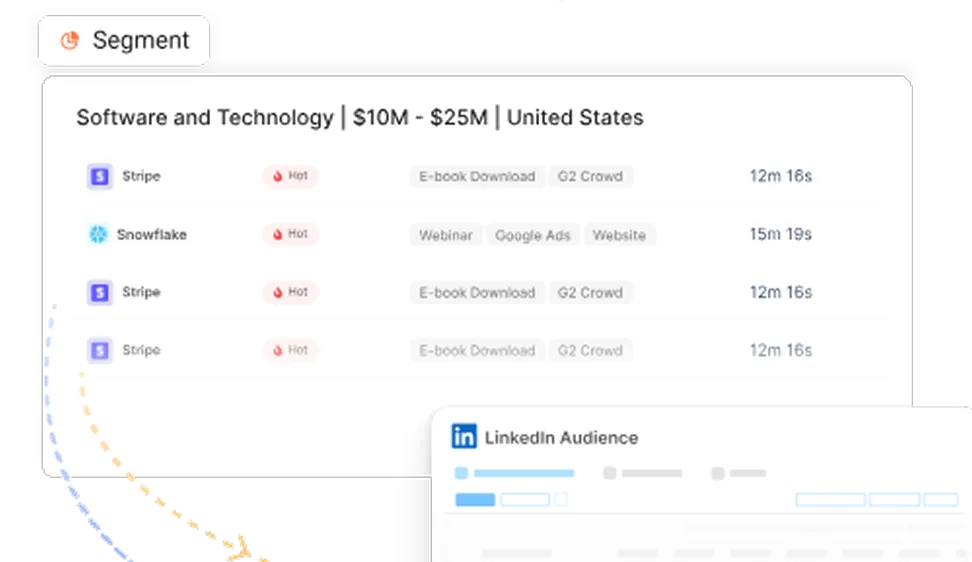
With Factors’ Google Ads Audience Sync, you scale across Search, GDN, and YouTube without wasting budget by focusing on ICP-fit accounts and high-intent visitors, and by suppressing budget leaks (customers, job-seekers, competitors).
How it works
- Factors tracks users from Google Ads visits.
- Maps visitors to accounts via reverse IP lookup, then enriches with firmographic fit, engagement signals, and account scoring.
- You build audience segments (e.g., ICP-fit + visited pricing + not a customer) and sync to Google Ads daily, no CSVs.
Quick setup
Connect Factors → Google Ads → define ICP rules and exclusions → build buyer-stage segments → daily sync → refresh creatives regularly to avoid fatigue.
Tie-in to AdPilot
Run ABM campaigns in Google Ads: Target. Train. Track. Target ICP accounts, send richer conversion feedback, and track real pipeline impact to win more high-ACV deals.
- Enhanced conversions: Train Google to think in pipeline
The core issue
In B2B, the problem isn’t your ads, it’s the signals you send back. If you treat all leads the same (or only send form-fills), Google learns to chase volume, not value.
What it does
AdPilot’s Google Enhanced Conversions sends richer conversion feedback so Smart Bidding can optimize to ICP accounts and pipeline, not cheap clicks. It credits non-linear journeys, captures click IDs, and brings back more learnable events, earlier and with account-level context.
How it works
- Persist click IDs (e.g., GCLID) across LPs, redirects, and forms.
- When an account lands on your site, check ICP-fit; combine click data with predictive scoring and send rich conversion events (including offline milestones) back to Google Ads.
- Use value-weighted signals (by ICP fit, stage, potential ACV) so Google optimizes for quality.
Why timing matters
Google stops considering conversion events after ~90 days. Sending feedback at the click or MQL stage preserves valuable optimization signals for long cycles.
If you want to see Factors’ Google AdPilot in action, Book a Demo today!
In a nutshell…
Google Ads is not dead, but lazy Google Ads definitely are.
If you’re spending over $10K/mo, demand more:
- Cleaner attribution
- More focused targeting
- LPs built for action
- Automation that scales precision, not waste
Make it a channel that powers revenue, not just reports. And build it like you’d build product: fast, functional, and user-obsessed.
Now go fix your CAC… may the Google Ads be with you!
FAQs for Google Ads
Q1. Why does my Google Ads dashboard look great, but my sales team says the leads are junk?
This is the "Lead Quality Gap." Google optimizes for the easiest conversion (form fills). If you don’t feed CRM data back to Google, the algorithm thinks a "student looking for a template" is just as valuable as a "VP of Sales." You must use Offline Conversion Imports to tell Google which leads actually turned into opportunities.
Q2. Should I bid on my own brand name?
Yes, but with caveats. Branded ads protect your "digital real estate" from competitors and allow you to control the messaging (e.g., promoting a new feature or demo). However, keep them in a separate campaign so their high performance doesn't skew the data of your harder-to-convert non-branded campaigns.
Q3. When is it safe to switch to Smart Bidding (Target CPA)?
Google’s AI needs data to learn. The industry standard is to wait until a campaign hits 30+ conversions per month using Manual CPC or Maximize Conversions before switching to Target CPA.
Q4. How do I scale my budget from $10k to $50k without doubling my CAC?
Scale incrementally (15–20% every 3 days) rather than all at once. Focus on scaling your BOFU (Bottom of Funnel) winners first. Once those are maxed out, use Audience Sync to expand TOFU reach specifically to ICP-fit accounts rather than the general public.
Q5. How do I stop my branded campaigns from "stealing" all the credit?
Branded terms naturally have high CTR and low CPL. If they are mixed into a general campaign, you won't realize your generic "SaaS software" keywords are failing. Split Brand and Non-Brand into separate campaigns. This gives you a clear view of your Customer Acquisition Cost (CAC) for new demand vs. existing brand awareness.
Q6. How does "Audience Sync" help with scaling?
When you scale budget, you risk reaching non-prospects. Audience Sync (using tools like Factors.ai) allows you to layer ICP-fit lists over your keywords. For example, you can bid on a broad term like "analytics software" but tell Google to only show that ad to people at companies with 500+ employees or specific technographic profiles.
Q7. What is the most effective B2B account structure?
The most scalable structure is Stage-Geo-Intent.
- Stage: (e.g., BOFU) ensures the offer matches buyer readiness.
- Geo: (e.g., US) allows you to align budget with regional sales territories.
- Intent: (e.g., Brand) keeps your high-converting brand traffic from skewing the data of your non-brand experiments.
Q8. Should I use Broad Match keywords in B2B?
Broad match can be a "budget leak" if used too early. Start with Exact and Phrase Match to maintain control. Only move to Broad Match once you are using Smart Bidding and have a robust Negative Keyword List in place. This allows Google's AI to find relevant variations without bidding on irrelevant "job seeker" or "consumer" terms.
See how Factors can 2x your ROI
Boost your LinkedIn ROI in no time using data-driven insights
Try AdPilot Today


.avif)

See Factors in action.
Schedule a personalized demo or sign up to get started for free
LinkedIn Marketing Partner
GDPR & SOC2 Type II

.svg)